
By the Rev. Canon Dr. Christopher Brittain
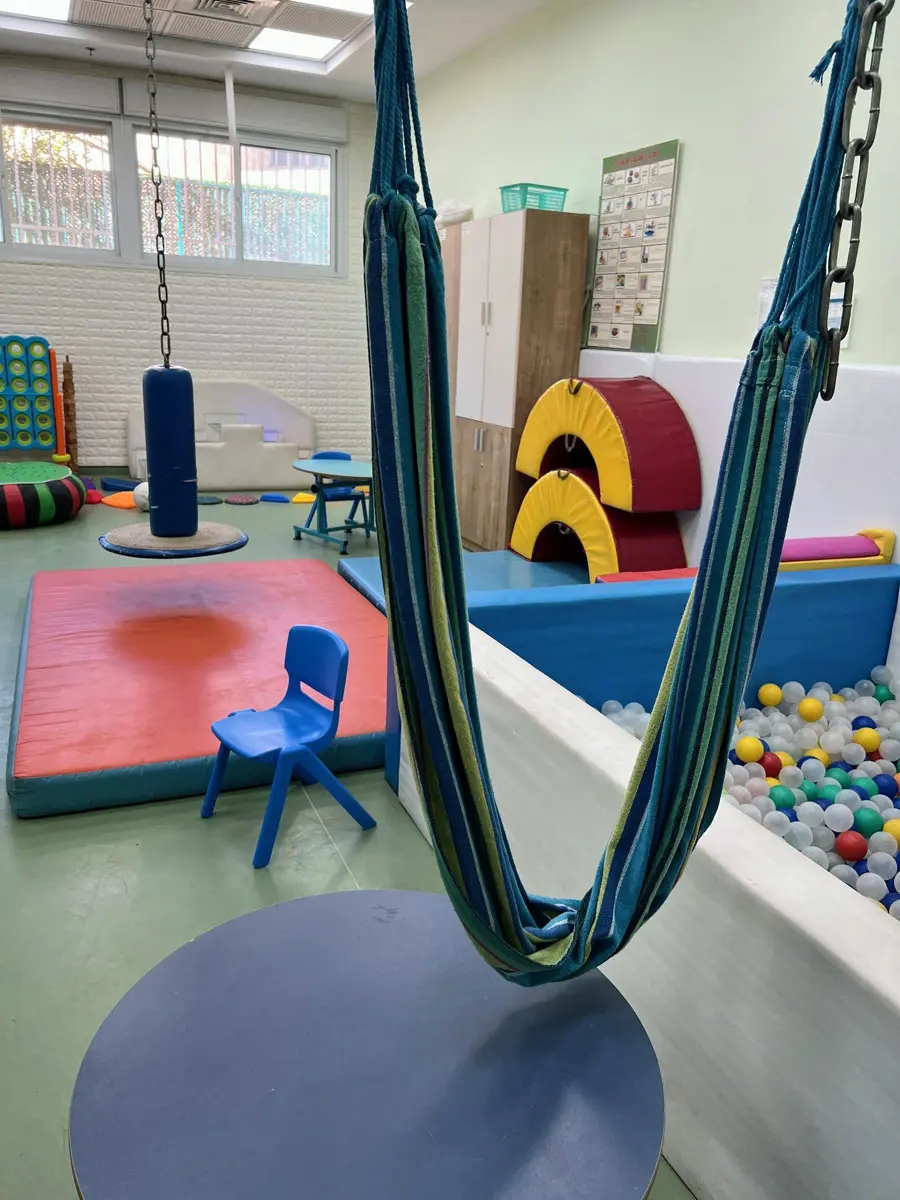
The first full day of the diocesan delegation’s visit to the Holy Land began, fittingly, on the Mount of Olives, where we visited the Princess Basma Centre for Disabled Children. Run by the Episcopal Diocese of Jerusalem, this amazing institution is dedicated to treating Palestinian children with disabilities. It also works intentionally to teach and empower parents to understand and better support such children. I was deeply moved and inspired by the experience.
“Basma” means “smile” in Arabic, and this facility was full of displays of joy: smiling children, smiling hospital staff and teachers, and smiling parents. While there, the delegation watched a video of a satellite program in Gaza that is run by the centre. In a small cardboard hut, a nurse and a therapist treat children with various disabilities in the context of what continues to be a war zone.
Watching this video, and hearing of stories of how difficult it was for Palestinians living in the West Bank to access this care facility due to being denied the necessary entry pass for Jerusalem or due to checkpoints being closed, brought to my mind these words from the prophet Isaiah: “The infant will play near the cobra’s den, and the young child will put its hand into the viper’s nest. They will neither harm nor destroy on all my holy mountain” (Isaiah 11:8). The Princess Basma Centre offers one example of this image being lived out faithfully in a perilous context.
Later that afternoon, we travelled to west Jerusalem to meet with the biblical scholar and Jesuit priest David Neuhaus. Born in South Africa to a Jewish family, at the age of fifteen Dr. Neuhaus was sent by his parents to a school in Jerusalem. He told us that, upon arrival, he saw that apartheid South Africa and Israeli society shared much in common in the way that significant portions of the population were treated as second-class citizens. Despite this impression, he became so attached to the region that he made it his home. After converting to Christianity and joining the Jesuits, he eventually settled at the Pontifical Biblical Institute in Jerusalem.
Our conversation with Dr. Neuhaus was challenging – not only due to his blunt description of the injustices imposed on Palestinians, but also because he highlighted ways Christianity is sometimes used to reinforce such acts. More than one of us sat up straight when he declared, “The bible can be vicious poison.” His point was to emphasize the ways in which scripture is frequently used in narrow and self-serving ways to justify injustice and violence. His concern was particularly with how the bible is employed as a weapon by some in the State of Israel to justify the displacement of Palestinians from their land.
Yet, even as Dr. Neuhaus criticized the treatment of Palestinians by the State of Israel and by the aggressive settler movement in the West Bank, he also acknowledged that “anti-Semitism is real.” That this terrible reality continues to fuel the crisis situation in Palestine is tragically poignant in the wake of this morning’s news of the attack on a Hanukkah celebration in Australia.
When asked where he sees signs of hope, Dr. Neuhaus soberly suggested there were few positive signs for the future in the Holy Land. Instead, he shared that he finds encouragement by looking to the past: “It’s not always been like this.” He reminded us that until around 1936, Jews, Christians and Muslims in the Holy Land lived as neighbours and in peace. Remembering that the present conflicts and atrocities don’t define what is possible in Palestine and Israel, he suggested, can nurture a prophetic imagination.
These words echoed what one of the leaders of Sabeel, the organization hosting our visit, shared with us. He suggested that faith in the empty tomb is not something that encourages us to pray, “Lord, Lord, great are my problems!” Instead, we are called to pray, “Problems, problems, great is our God.”
Although this was only the delegation’s first day of encountering the struggles of Palestinians in the region, it was already clear to everyone in our group that we were going to be deeply impacted by what we were witnessing. Later that evening, this realization began to sink in as we were walking through the Christian Quarter of the Old City. Some in the group decided to get a small tattoo on their arm to mark this profound moment in our lives. Whether it was visible or not, we had already recognized that this trip was going to change us permanently.
The Rev. Canon Dr. Christopher Brittain is the Dean of Divinity at Trinity College, Toronto.
See all the Happening Now in Palestine posts.
