
By Dr. Sylvia Keesmaat
Daoud Nassar and his family live on hill-top farm near Bethlehem called Tent of Nations. Their terraced land produces abundant harvests of olives, grapes and apricots. Their fertile land is the red arable loam that is called ‘adamah in Genesis 1, the earth from which humanity, ‘adam, is formed. Looking down we see the winter crocuses that Isaiah mentions in Isaiah 35:1, and looking up it is possible to see the Mediterranean on a clear day. There are cisterns to collect water, composting toilets to create nutrients, solar panels for energy, and artwork on doors and walls. It seems like an idyllic place.
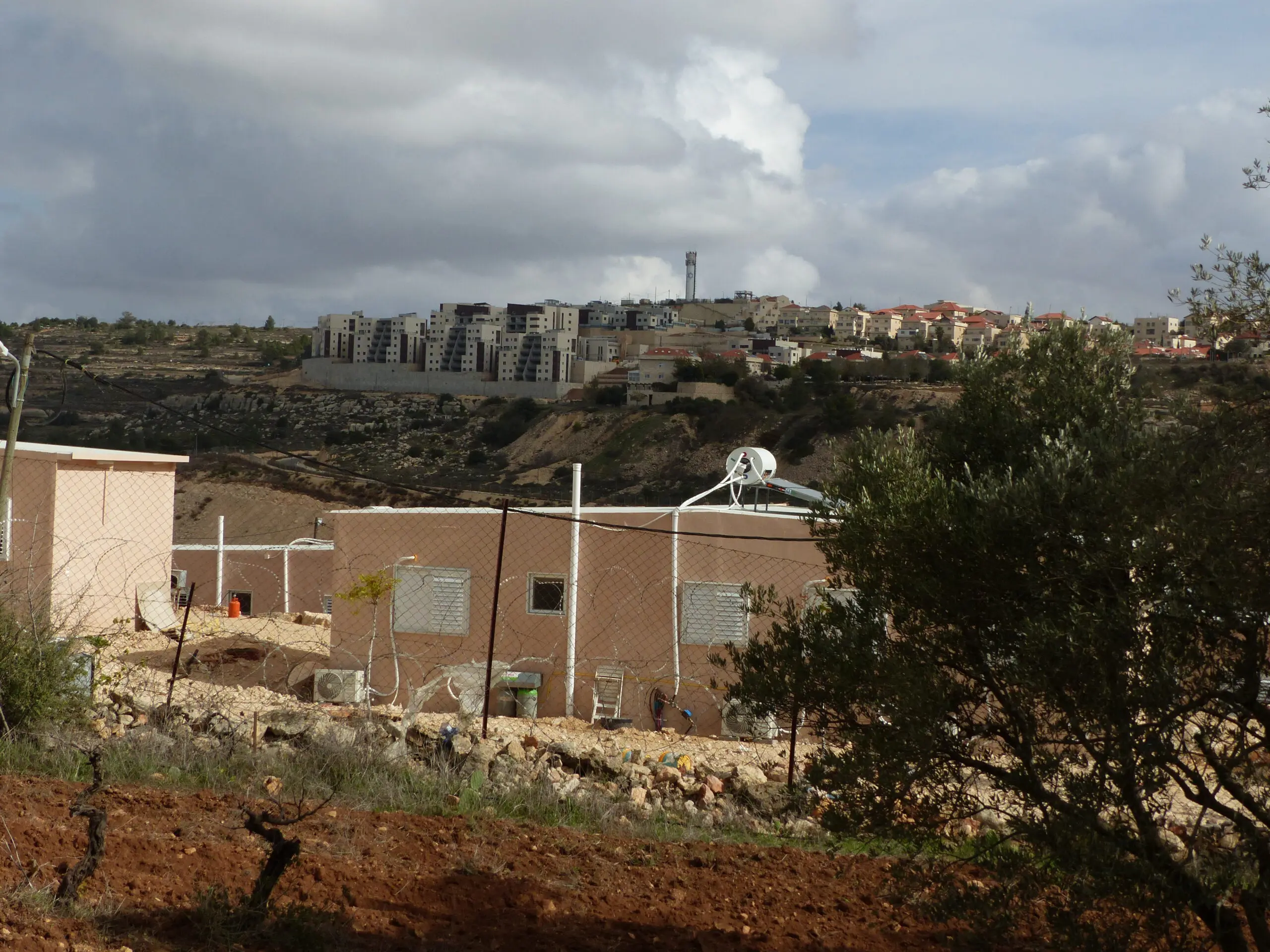
Until you hear the stories. The abundant harvests have been disrupted by Israeli settlers bulldozing the apricot trees, burning 1,500 olive trees and destroying grape vines. The cisterns are underground because Israeli settlers have repeatedly destroyed above-ground water storage tanks. The composting toilets and solar panels are necessary because Israel has cut off water and electricity to the farm. The artwork is in caves that, unlike buildings, the settlers cannot destroy, and the colourful paintings are a form of creative resistance against violence. Moreover, the Israeli state has been trying to seize this land for 35 years, embroiling the Nassar family in endless legal battles in spite of documents that demonstrate their ownership.
The view is disrupted by Israeli settler homes, not only on the surrounding hills, but also built against the fence line of the farm. The road to town has been blocked, cutting the farm off from neighbours. And looking in the direction of the Mediterranean, Daoud says quietly: “we could see the bombs falling on Gaza from here.” And we realize that it is all of a piece; the violent attempt to exterminate this farm is part of the larger systemic plan to destroy the Palestinian people and their connection to this land.
And yet the motto of Tent of Nations is: “We refuse to be enemies.” Many of the trees that were destroyed were replanted by Jewish groups from the U.K. and the Centre for Jewish Non-Violence from the United States. Many international volunteers are welcomed here, for when visitors arrive the violence pauses.

Like Naboth in 1 Kings 24, Daoud has been encouraged to sell the land; he just has to name his price. But like Naboth, he can’t imagine living apart from the land that has grounded his family for generations. “This is our inheritance,” he says. “This is the place we call home.” Daoud is committed to staying on this land in spite of the challenges, so that Tent of Nations might continue to be a place of reconciliation for diverse peoples and a place of ecological renewal for the land.
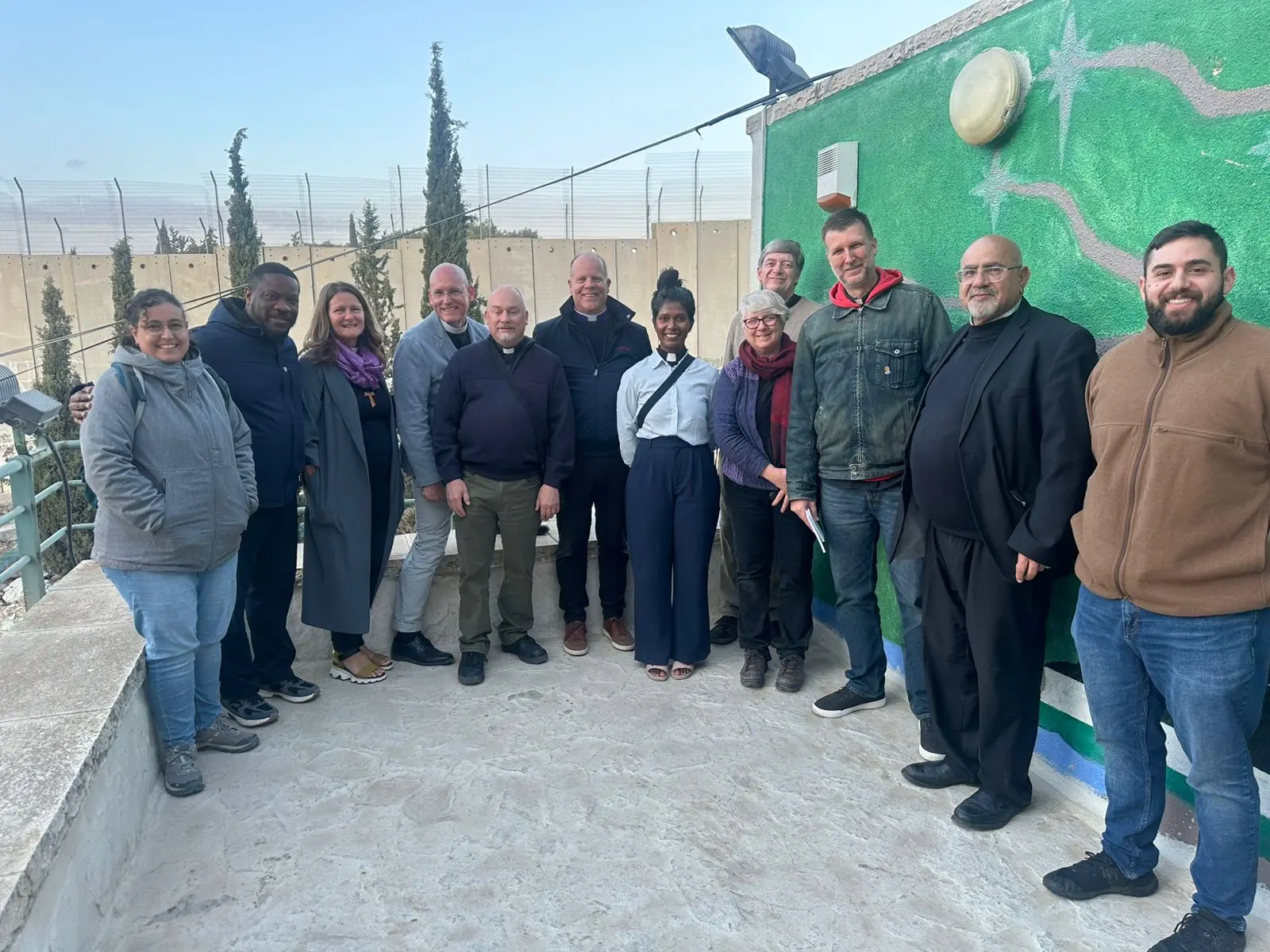
Such an emphasis on reconciliation is also at the heart of Wi’am: The Palestinian Conflict Transformation Center, where we ended our day. With special programs for women, youth and those dealing with trauma, Zoughbi Alzoughbi, the founder and director, provided insight into the difficulties of reconciliation in the midst of a traumatized population. “There is no trauma healing, only trauma coping,” he says, “because there is no post-traumatic stress disorder here; the trauma is ongoing.” Wi’am seeks to engage community-based mediation as a pathway to transformation in the midst of violence. Zoughbi does this work at great personal cost: he is married to an American whom Israel will not allow to live in Palestine with him. The separation wall that casts its shadow over the Wi’am building represents how the state of Israel extends its reach into the personal and familial lives of so many Palestinians.
Between Tent of Nations and Wi’am, we experienced two moments of juxtaposition. The first was one of the amazing meals that punctuated our trip, reminding us that even in the midst of violence, Palestinian life continues with moments of deep joy and nourishment.
The other was the Church of the Nativity – the visually rich large church complex built over the place where Jesus was supposedly born. Like at Tent of Nations, we descended into a cave, but this one was richly lit with lamps and beautiful artwork commemorating the birth of Jesus.
At the end of the day, I pondered where we had truly seen evidence of the incarnation. Was it in the sumptuously decorated church? Or did we see God become flesh in a centre for conflict transformation in the shadow of the Separation Wall? Perhaps. And perhaps God has come to live among us on the land of a farm that is planting literal seeds of hope and reconciliation in the rich red loam of Palestine.
Dr. Sylvia Keesmaat teaches online at Bible Remixed (www.bibleremixed.ca) and speaks and preaches frequently in the Diocese of Toronto.
See all the Happening Now in Palestine posts.
