Skip To Content
News

Archives Awareness A-Z

Archives Awareness A-Z


We’re joining the Archives of Ontario in its month-long #ArchivesAtoZ campaign. The aim is to increase the public’s awareness of archives and their collections. We’ll be sharing four posts throughout this month showcasing items from our holdings or providing information about Archives terminology based on each letter of the alphabet.

This week we will cover H to M!

H – Hollinger Box

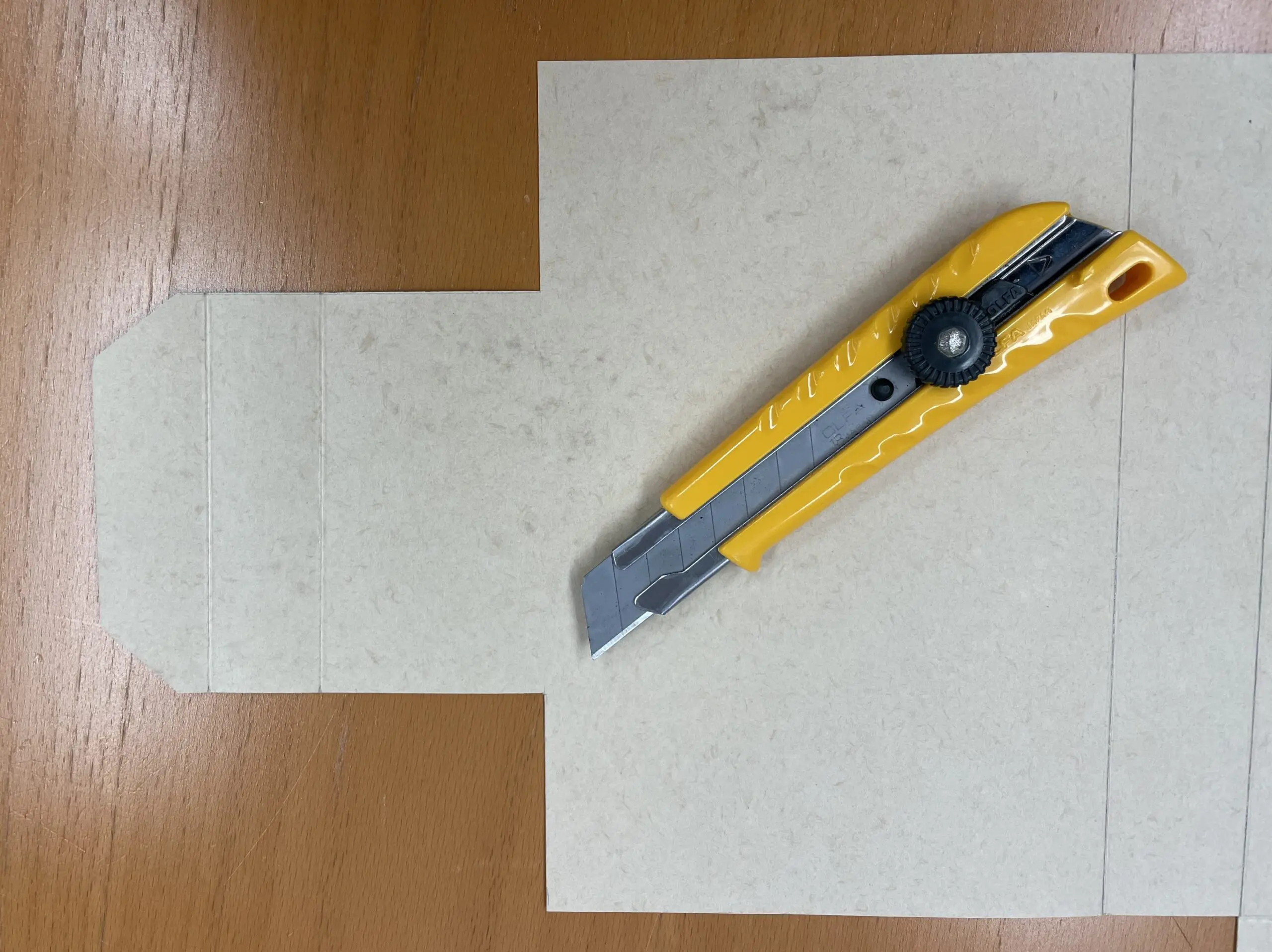
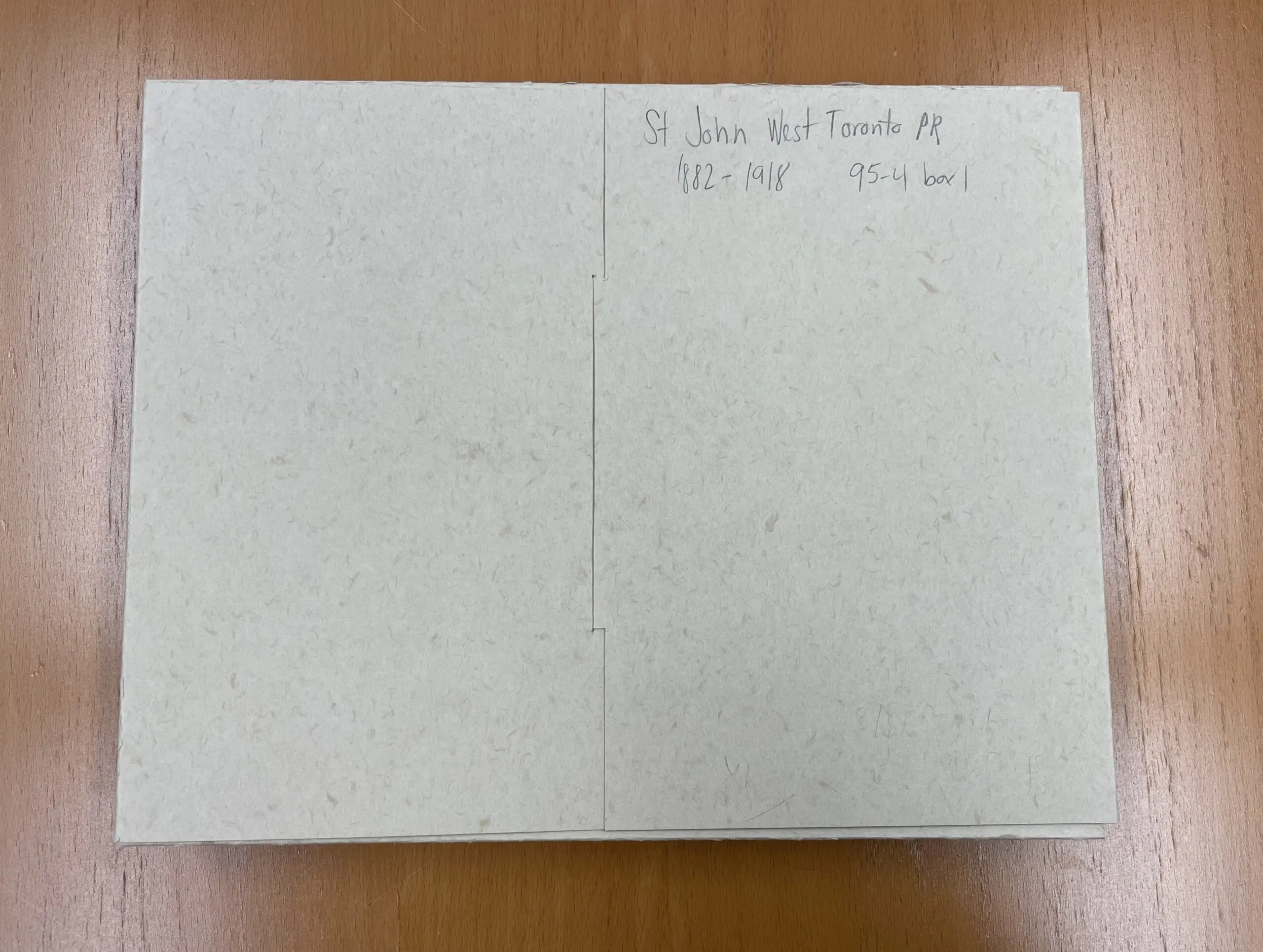
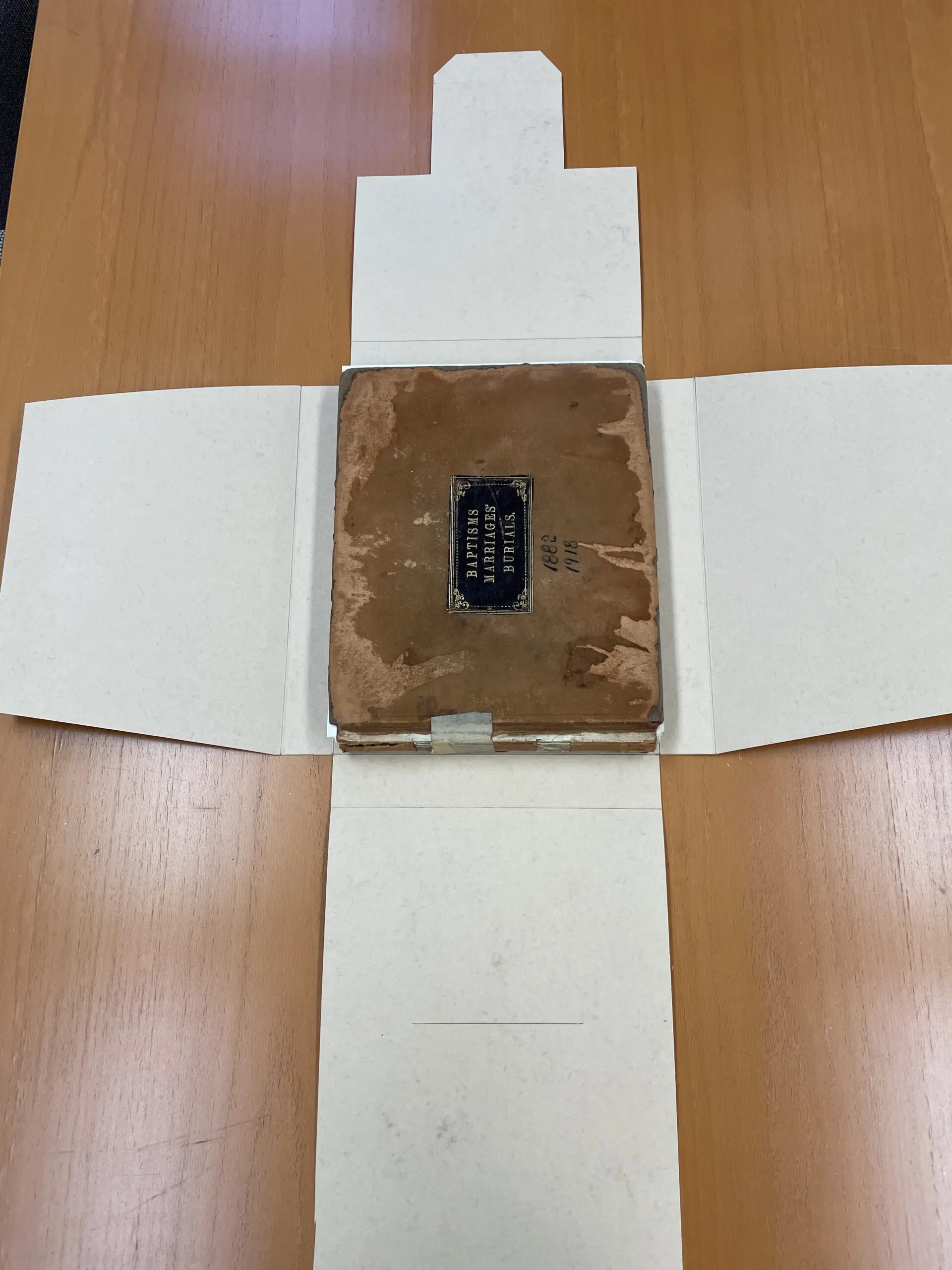
To help ensure that records are preserved, the Diocesan Archives stores these items in Hollinger style boxes. Hollinger is a brand name but is generally used to describe these special archival boxes that are made from acid-free/lignin-free materials. Archival records should be stored in acid-free materials to help prevent chemical deterioration such as brittleness, yellowing or fading and to allow for ongoing access. Containers that are not acid free release acidic compounds, which will migrate to the records and ultimately render them inaccessible. While this may take many years, it must be remembered that the aim of the archives is to collect records of enduring value and ensure they remain accessible for hundreds of years for the benefit and edification of future generations.


While there are banker’s boxes that are acid-free these are not the best solution for records that might be frequently accessed, as they become quite heavy and can become difficult to transfer to and from shelves. It can also lead to greater risk of records slumping and incurring mechanical damage due to boxes not being filled sufficiently. However, for less frequently accessed collections these are suitable containers.

Hollinger boxes also have the advantage of protecting records from dust, which attracts insects and can lead to increased insect activity.

I – Insects

While not everyone enjoys thinking about insects, archivists need to be aware of any insect activity in the Archives, to ensure that records of enduring value are not damaged. Several insects such as silverfish, booklice and cockroaches, feed off of paper, starches, and adhesives and can cause damage and staining to paper records, photographs and audiovisual material.

As insects are drawn to areas that are warm and humid, the temperature and humidity controls in our vault storage space help to keep insect activity to a minimum. However, to ensure that we would become aware if there was increased insect activity in the Archives, we placed several sticky traps around the storage areas. These are checked on a routine basis and types and numbers of insects found are tracked in a spreadsheet so we can assess if there is an increase. If there were a larger number of insects in a trap than normal or expected, then the collection would be examined in the area to try and determine the source and treat any impacted records. When new records are received from a congregation, they are checked for any obvious insect activity so that they can be treated before being introduced into the storage area.

The archives recognize that the sticky traps may seem inhumane; however, it is the best solution for tracking pest activity.


J – St. Alban, Janetville

The Church of St. Alban, Janetville, was a red brick structure located on the boundary of Cartwright and Manvers Townships, in the County of Durham, about four miles southwest of Janetville. Land for the church and cemetery was donated by William Graham on January 27, 1881. The church opened in 1883 and was consecrated on May 29, 1883.

Unfortunately, the congregation did not flourish, and the decision was made to close in 1921. The church was left to fall into disrepair until a tax bill was received in 1926. Shortly thereafter the building was sold for $25.

There are very few records in the archives specific to St. Alban, Janetville, as registers were generally kept under the parish and events from all congregations entered in the one register. The one photograph of the church that we have in the archives appears to be a photograph of a photograph.


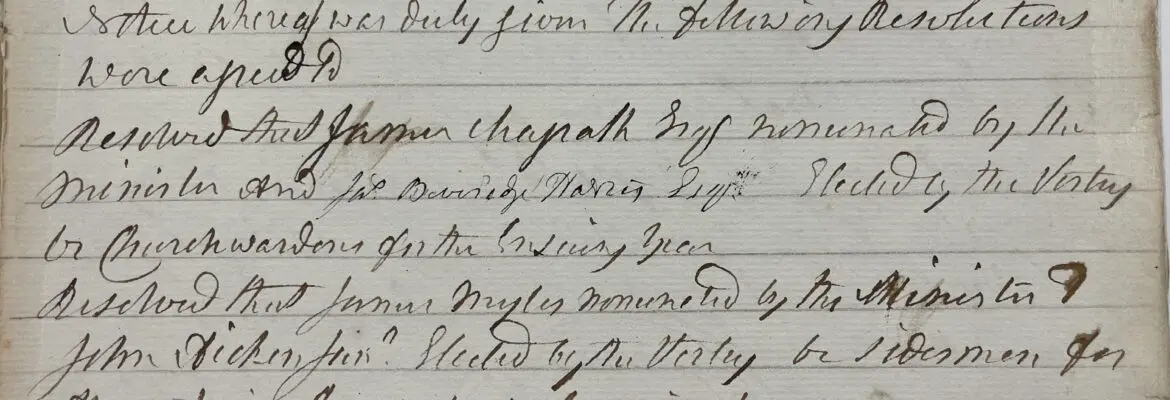
However, there is a vestry book that contains service information from 1909-1921. Unlike some vestry books, where the final service is clearly noted as such, the entries in the St. Alban’s vestry book just stop in mid-1921. In reviewing the vestry book further to see if there might be a note somewhere about the final service, it was discovered that the priest of the parish of Manvers to record summer services to a tent congregation at Scugog Point (also referred to as Armstrong’s Point) for a short period of time. This was a new discovery for the Archives and a reminder of the gems of information that can be found in the archives if the time is taken to study the records.

Entries related to 1927-1928 services at Scugog Point in the St. Alban, Janetville vestry book.
Final entry in 1930 for Scugog point in the St. Alban, Janetville vestry book.

K – Diocese of Seoul, Korea

While the Diocese of Toronto currently enjoys a companion relationship with the Diocese of Brasilia, our first companion relationship was with the Diocese of Seoul in Korea. This initial relationship came about after the General Synod of 1986, when the Anglican Church of Canada endorsed the idea of companion relationships with other dioceses of the Anglican Communion.

The Diocese of Toronto began exploring what a companion relationship might look like in 1988 and began corresponding with the Diocese of Seoul in 1989 to begin discussing a possible companionship. In October 1989 the bishop of the Diocese of Seoul came to the Diocese of Toronto during our Sesquicentennial celebrations and the final details of the relationship were ironed out. In October 1990 a contingent from the Diocese of Toronto travelled to Korea and the companionship covenant was signed on October 4, 1990. The Diocesan archives hold the records documenting this process. The archives also holds photographs of the visit to Korea thanks to a donation of two photograph albums by the Rev. Bob Bettson in 2017.

The bishops signing the companionship covenant in 1990

Subsequently, in 1993 a contingent from the Diocese of Seoul traveled to Toronto to continue to explore a shared understanding of what it means to be Anglican Christians in two different cultures.

Celebrating with the 1993 Korean delegation to Diocese of Toronto


L – Lawn Bowling

It’s not quite cricket but several of our congregations had lawn bowling clubs including St. Simon the Apostle and St. John the Baptist, Norway. Unfortunately, the records of these clubs are sparse. In the case of St. Simon the Apostle the Diocesan Archives hold the lawn bowling club minute book covering from 1908, when the club was established, until 1922, when the club lost their bowling green due to the decision to build a rectory in that location.

St. Simon lawn bowling club minutes 1922

The 1908 minutes for the St. Simon lawn bowling club suggest that they were a very amateur team who played more for the fun of the game than the result that year.

St. Simon the Apostle, 1908 Lawn Bowling Club President’s Address.


M – Maps

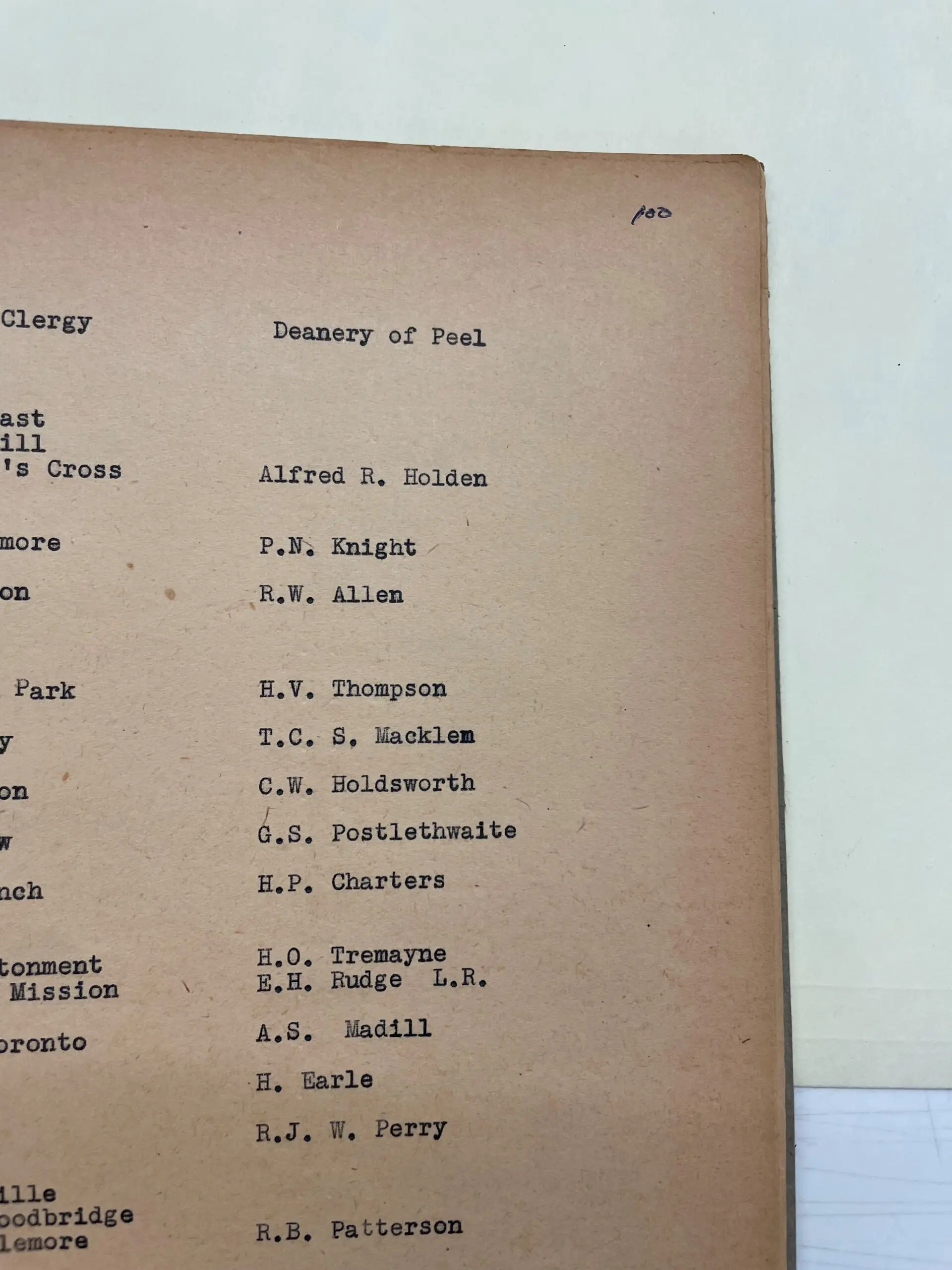
The boundaries of the Diocese of Toronto changed significantly after being set apart in 1839, with areas carved out with the setting apart of Dioceses of Huron, Ontario, Algoma and Niagara in 1857, 1861, 1873 and 1875 respectively. The earliest map that we have of the Diocese is from 1883, and we have additional maps for 1911 and 1956, with the map for 1956 showing the Archdeaconries and Rural Deaneries at the time. There have been subsequent maps but with far less detail.

1883 map of the Diocese of Toronto showing the original western boundary of the Diocese.
2011 map of the Diocese of Toronto showing adjusted western boundary.

When the Diocese began work on redeveloping the Episcopal Leadershipmodel through the Episcopal Leadership Working Group, the Rev. Canon Rob Mitchell began work to create an updated map of the Diocese. The archives provided details on the parish boundaries for each parish to assist with creating this map. In the process of doing this Rev. Canon Mitchell discovered that there was a change to the Diocesan boundaries that occurred sometime after 1956 based on the fact that the western boundary of the Diocese juts out around Mississauga in current map of the Diocese. The earlier maps show the boundary as being a straight line.


Through the records in the Archives we were able to determine that due to the regional municipality of Peel changing its boundary in the late 1970’s the Diocese of Toronto and the Diocese of Niagara agreed in 1982 to make an adjustment to this shared boundary. The Provincial Synod approved this change to the boundary in November 1982.

November 18, 1982 Executive Committee minutes regarding Diocesan boundary change.


The wonderful thing about the new map is that it was built in google maps and plots all the churches that have existed in the Diocese of Toronto. With the agreement of Rev. Canon Mitchell we were able to export the details from the map he had created to develop a new finding aid for the Diocesan Archives.


This allows for providing information on the parish registers (baptisms, confirmations, marriages and burials) that we have for each congregation. The information shared is aimed primarily at genealogists who may be trying to track down an ancestor’s record. The information provided will help them to determine where they might find records related to their ancestors. We have only added details on parish registers held for a handful of the closed churches, and so it is still a work in progress but we are excited to share what has been completed so far in the Map of Congregations from 1800 to present.


Next week we will share Archives Awareness N-S!