
We’re joining the Archives of Ontario in its month-long #ArchivesAtoZ campaign. The aim is to increase the public’s awareness of archives and their collections. We’ll be sharing four posts throughout this month showcasing items from our holdings or providing information about Archives terminology based on each letter of the alphabet.
This week we will cover N to S!
N – Nativity, Malvern
Nativity, Malvern came about its name in a slightly unusual fashion. When a congregation was first organized in the Malvern neighbourhood in 1974, Bishop Snell gave it the name of St. Gregory. In a letter to the incumbent of the congregation, he wrote that this name “does not have to be permanent” but “will give the work a focus at this time”.
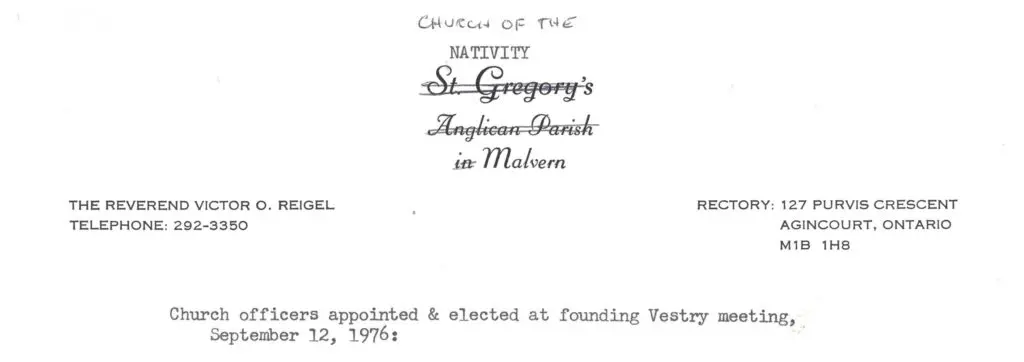
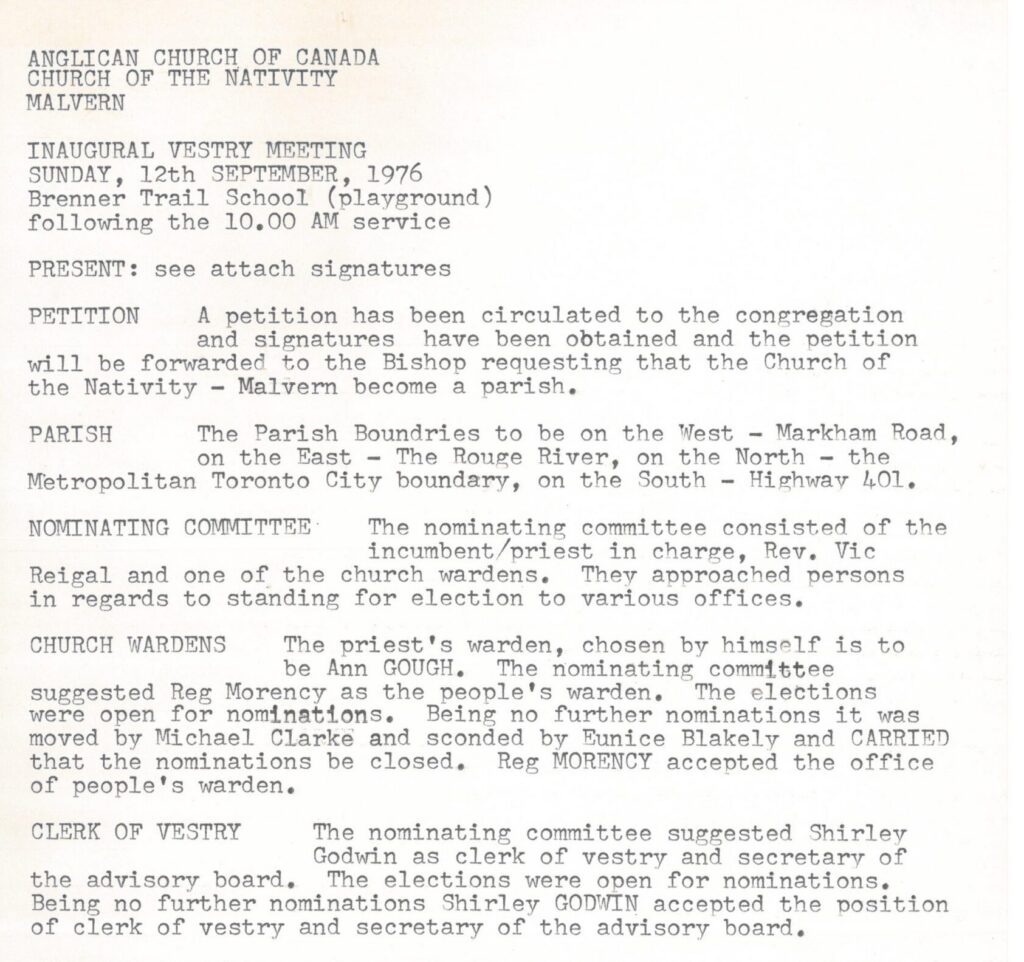
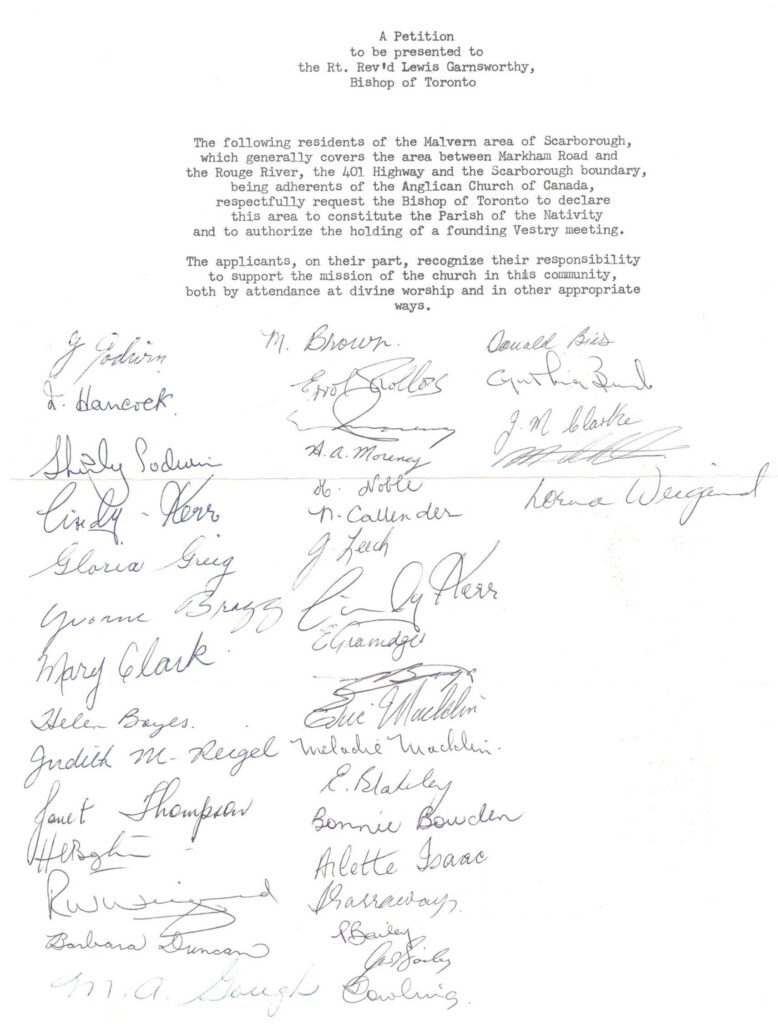
In June 1976, the Church of the Nativity located in the neighbourhood of Monarch Park voted to disestablish. It offered its memorials and some financial assets to the congregation in Malvern, and the decision was made to take the name Nativity rather than keep the name St. Gregory. At its inaugural vestry on Sept. 12, 1976, the congregation of Nativity, Malvern circulated a petition for signatures that would be sent to the bishop to set them apart as the parish of Nativity, Malvern.
The Diocesan Archives holds only a few records from Nativity, Malvern, as it’s a relatively young congregation having been in existence only since 1974. However, we do have the vestry minutes from 1976-1991, as well as some records related to its original campus building shared with the Presbyterian church and building fund records related to building its own church building. We were also very happy to receive its parish registers, including confirmations up to 2025, at Synod in November 2025.
O – Oaths & Subscriptions
When a person is ordained a deacon and then again when they are ordained a priest, they must make oaths and subscriptions in the form of certain declarations. On Aug. 4, 1839, the Rev. John Strachan became bishop of the newly set apart Diocese of Toronto. Three months later he ordained the first priest in the Diocese of Toronto, the Rev. Robert J.C. Taylor. Mr. Taylor became the first person to sign the register of oaths and subscriptions, though his signature is only appended to the Articles of Religion at the beginning of the register.
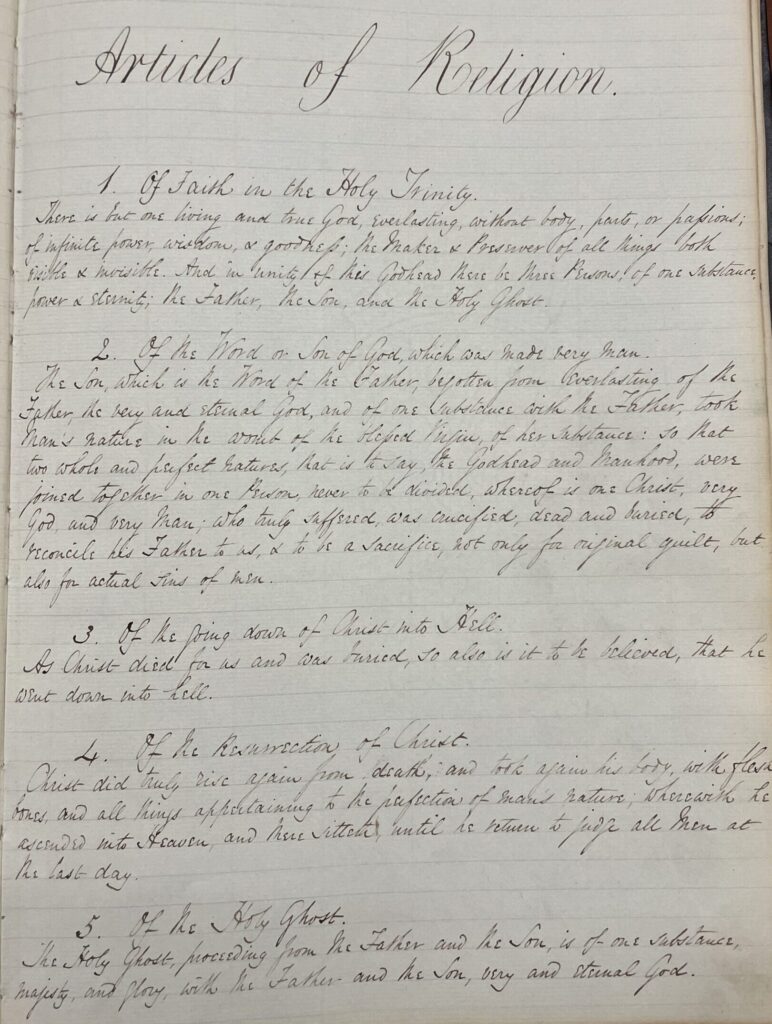
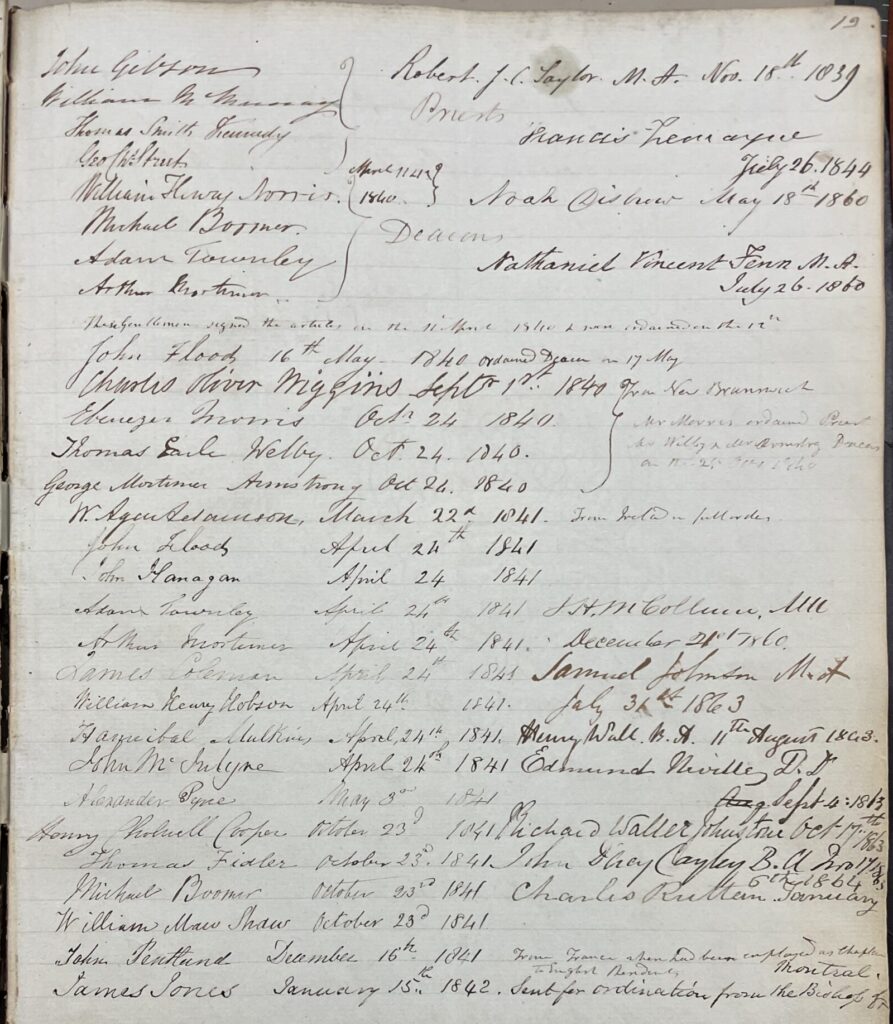
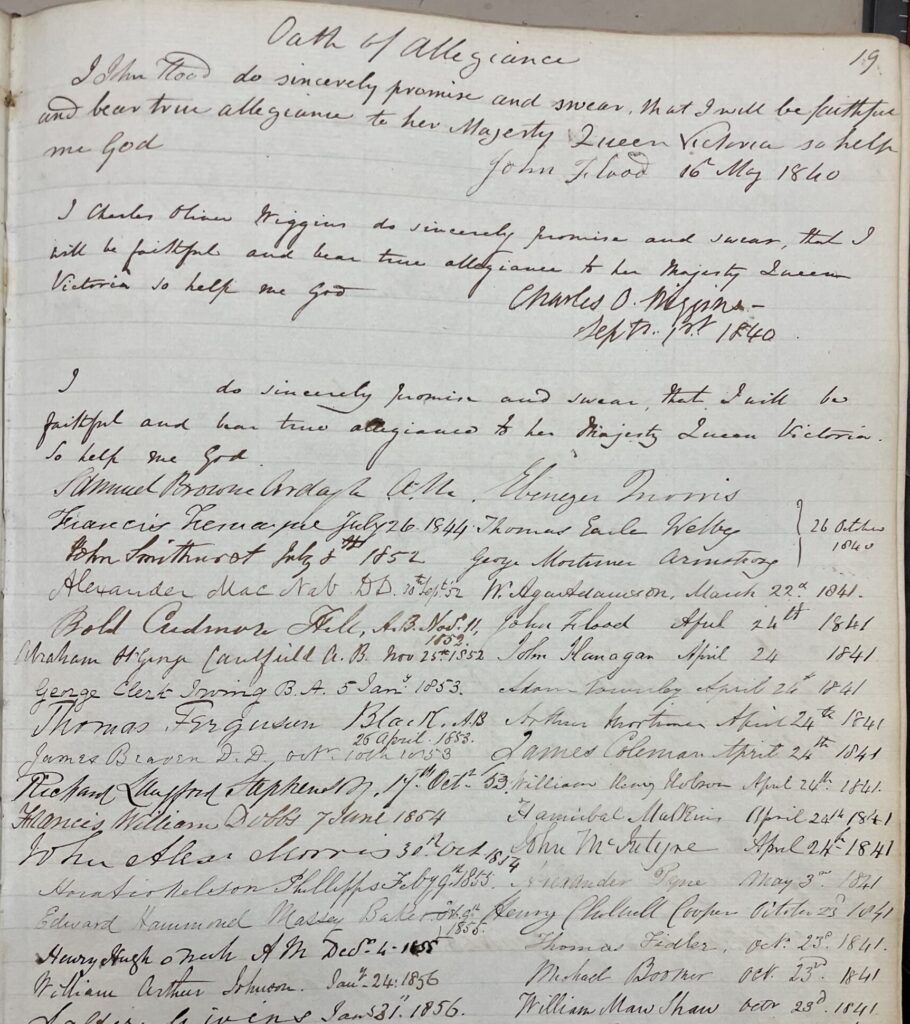
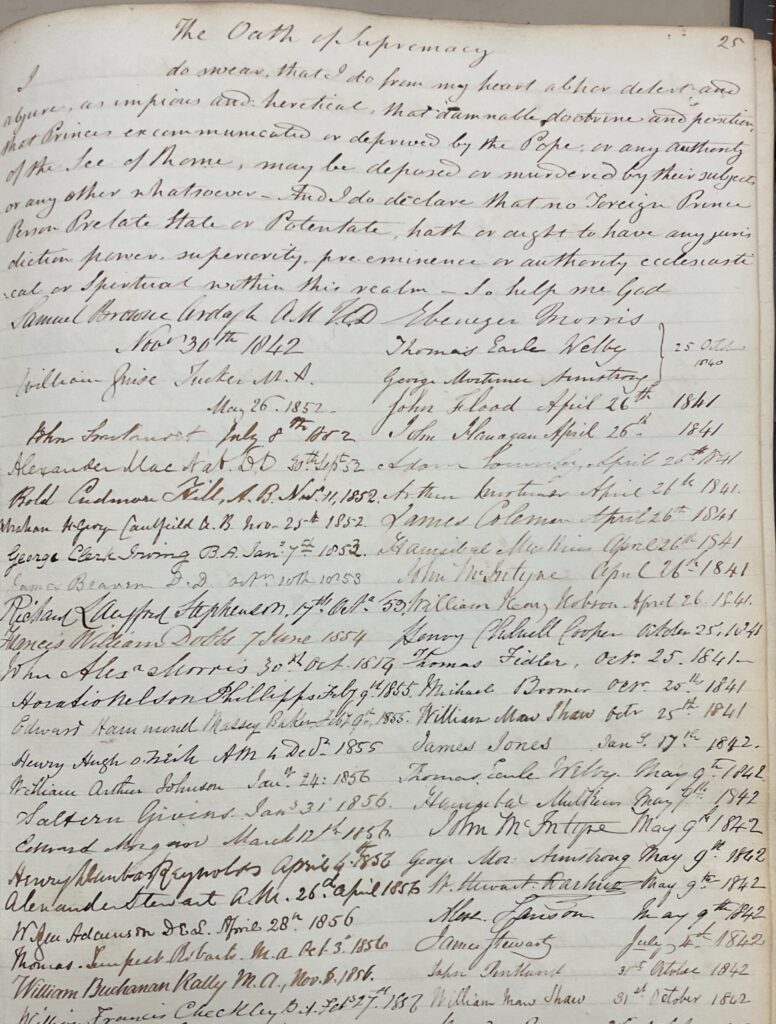
Those ordained in 1840 and onwards have signed not only the Articles of Religion but also the Oath of Allegiance to Queen Victoria, the Oath of Supremacy, the Oath against Simoniacal Contracts, the Oath of Canonical Obedience, the Oath of Residence and the Declaration.
P – Picnics
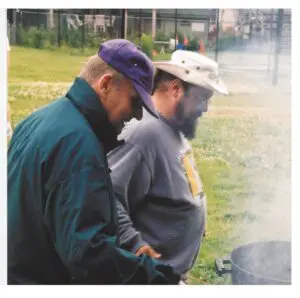
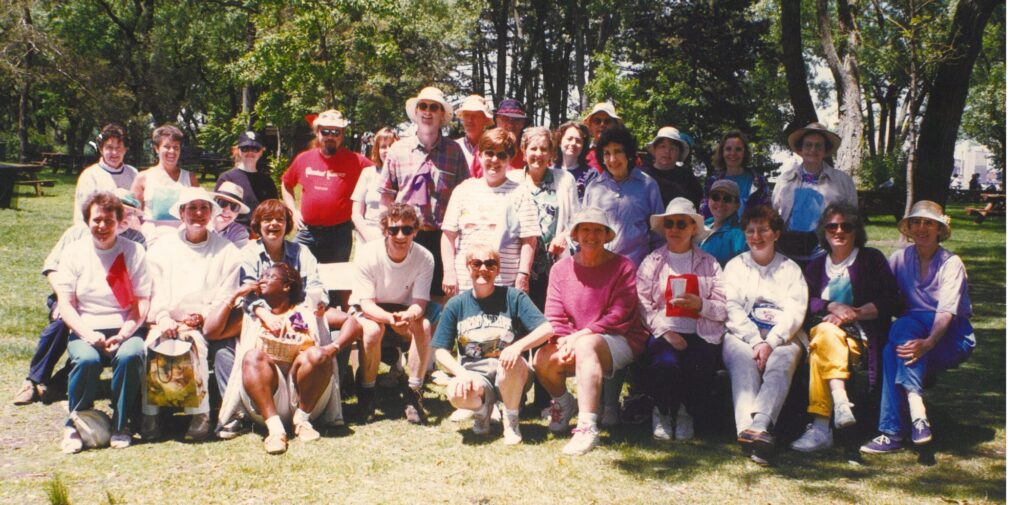
Fellowship can be an important aspect of attending church for people, and what better way to encourage fellowship than the early summer church picnic. This extends to the Synod Office staff, who have enjoyed picnics at the Toronto Islands, St. George by the Grange (then known as St. George the Martyr, Parkdale) and St. Leonard, among other locations.
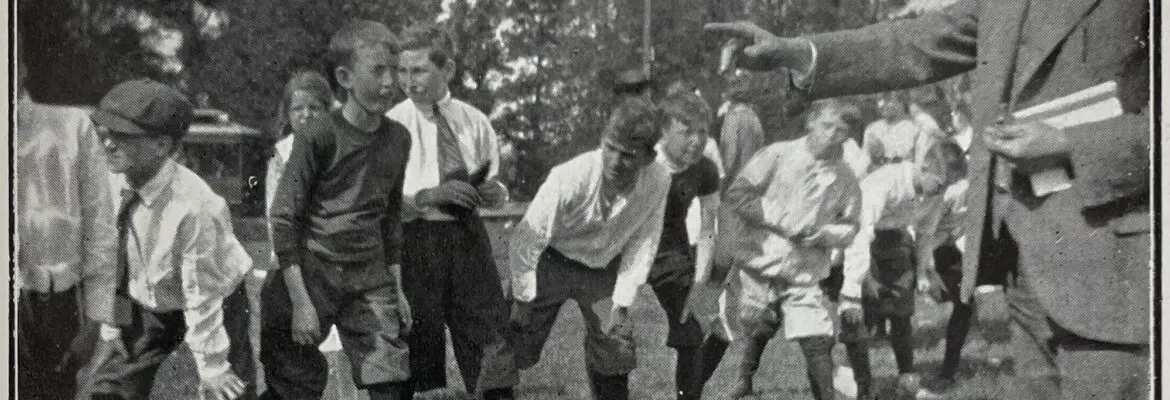
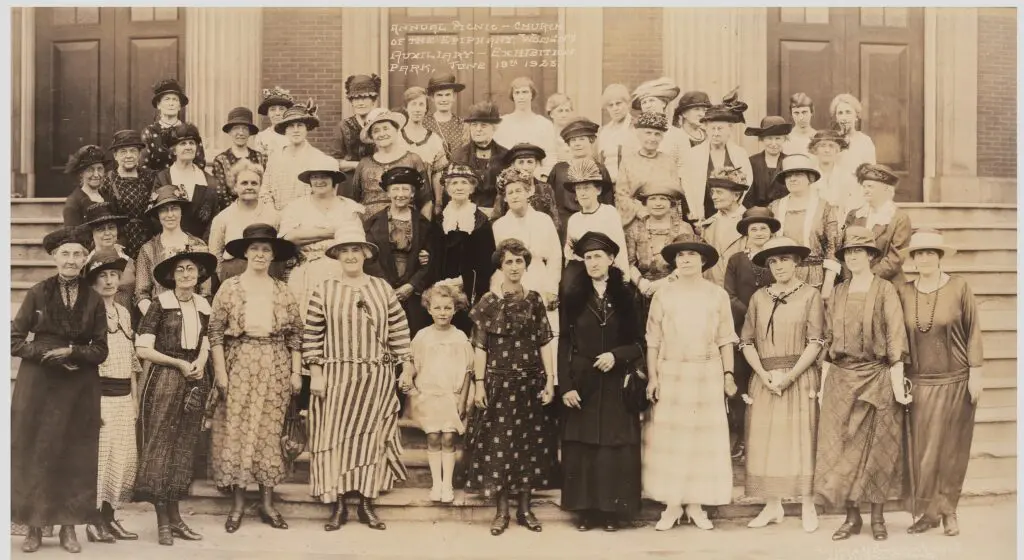
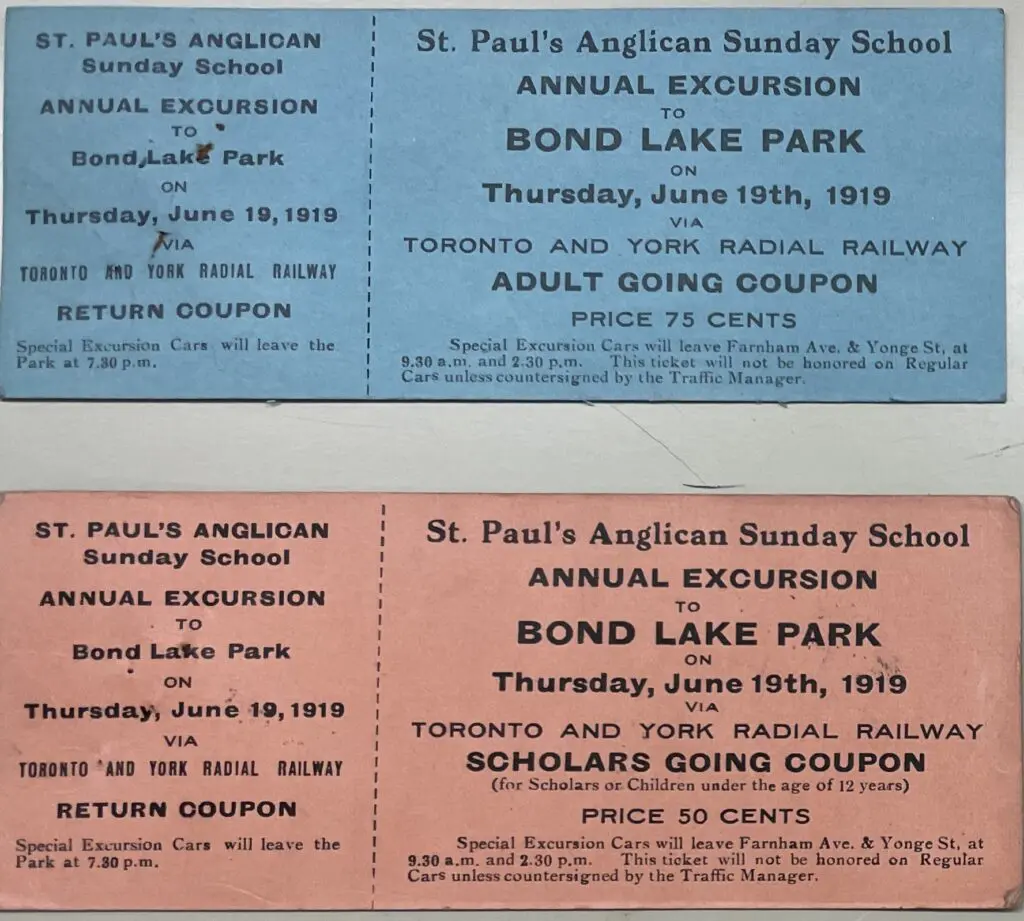
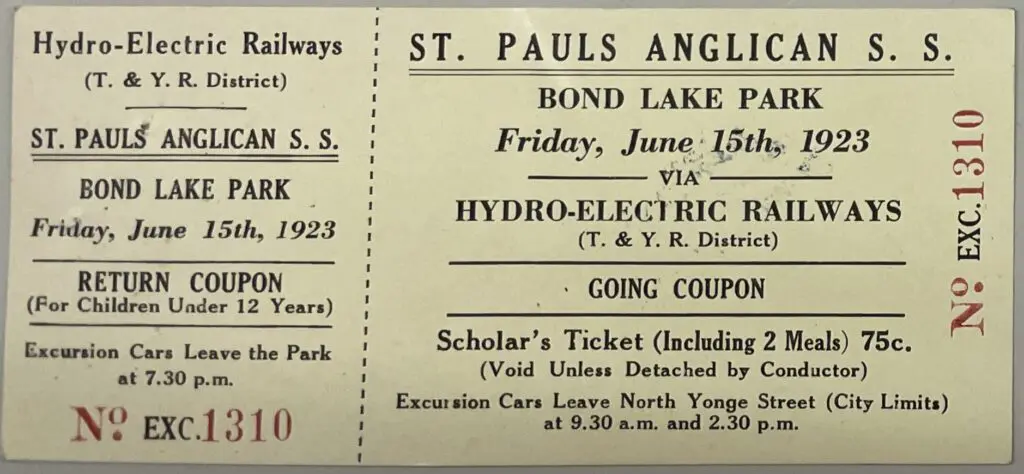
The Diocesan Archives also holds records and photographs related to picnics and picnic planning within the records of various congregations, ranging from an Epiphany, Parkdale WA picnic to a number of Sunday School picnics.
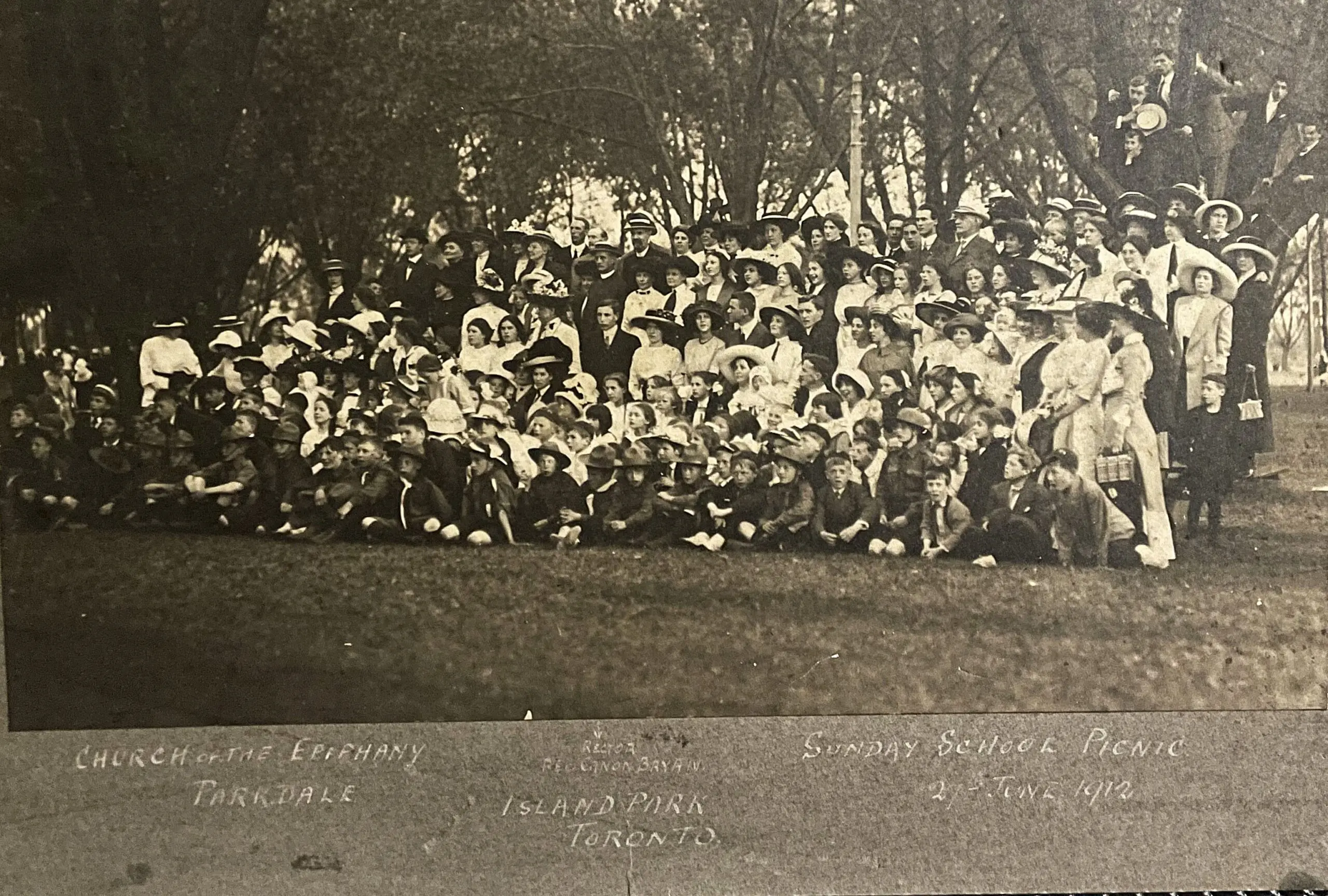
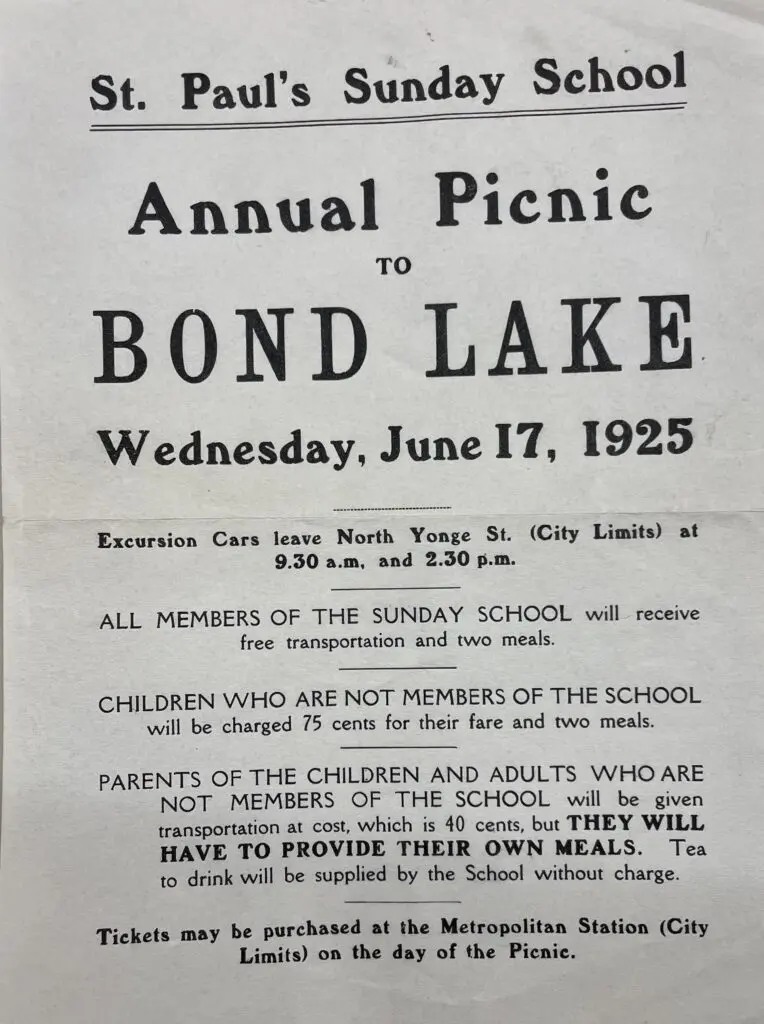
The records of the Sunday School picnics held by St. Paul, Bloor Street between 1919 and 1925 provide information about the picnic logistics, as well as the changes in transit during that time period.
Q – St. Elizabeth, Queensway
St. Elizabeth, Queensway began as a Sunday School founded in 1917 by a member of Christ Church, Mimico, which met at Queensway Public School. By 1922 this had become a mission of Christ Church, Mimico, with services in addition to a Sunday School. It was given the name of St. Elizabeth’s Mission and operated out of Queensway Community Hall. Worship services in the early years were conducted primarily by theological students, including the future Bishop of Toronto, George Snell. Unfortunately, the mission did not remain viable, and the last service took place on May 30, 1935.
However, towards the end of WWII, there was renewed interest in establishing a congregation in the Queensway area, as the drive to Mimico was too far due to gas rationing. Weekly services as a mission of Christ Church, Mimico resumed in May 1945.
On June 1, 1946, the Rev. H. St. Clair Hilchey took charge of St. Elizabeth’s Mission, and in 1948 a building fund was started. The sod turning service was held on April 8, 1950, and the basement of the building was dedicated on March 18, 1951, by Bishop Alton Ray Beverley, with George Snell as preacher.
The mission of St. Elizabeth was given parish status in 1954, and the laying of the foundation stone took place on Oct. 23, 1955, and a time capsule was placed in the corner stone. The completed church was dedicated on May 7, 1956, by Bishop Frederick Wilkinson.
By the early 1990s, the congregation of St. Elizabeth’s made the decision to disestablish as of Dec. 27, 1992. At the same time, there was a need in the Diocese for a church home for a Chinese-speaking Anglican congregation, and the decision was made to transfer the St. Elizabeth church building to this congregation, which also took on the name St. Elizabeth.
Unfortunately, in December 1999 a fire partially destroyed the building and a decision was made not to rebuild at that location. The remaining structure was deconsecrated on April 11, 2000, and subsequently demolished. During the demolition, the time capsule that had been placed in the corner stone was recovered and transferred to the Diocesan Archives, where the copper box was opened.
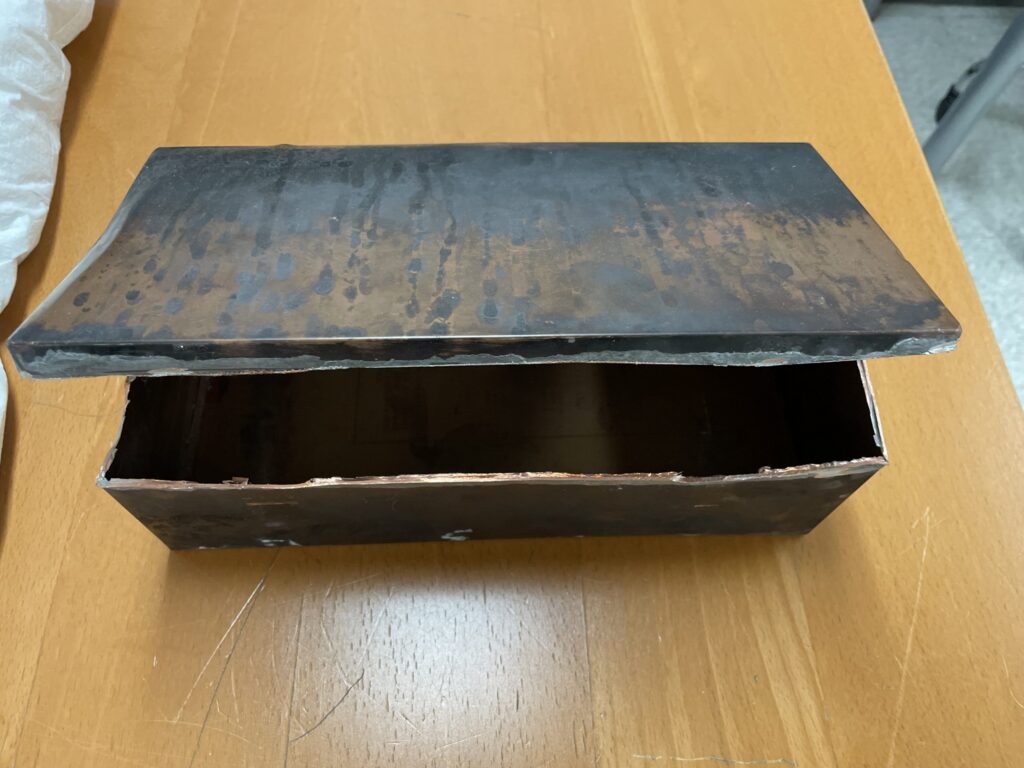
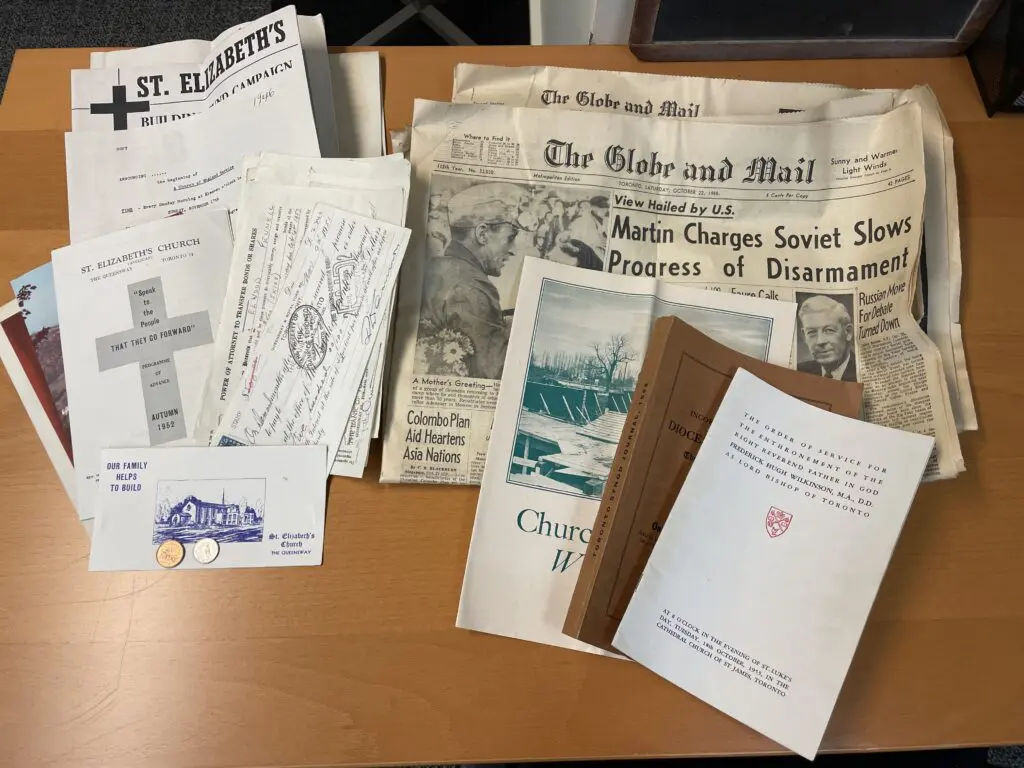
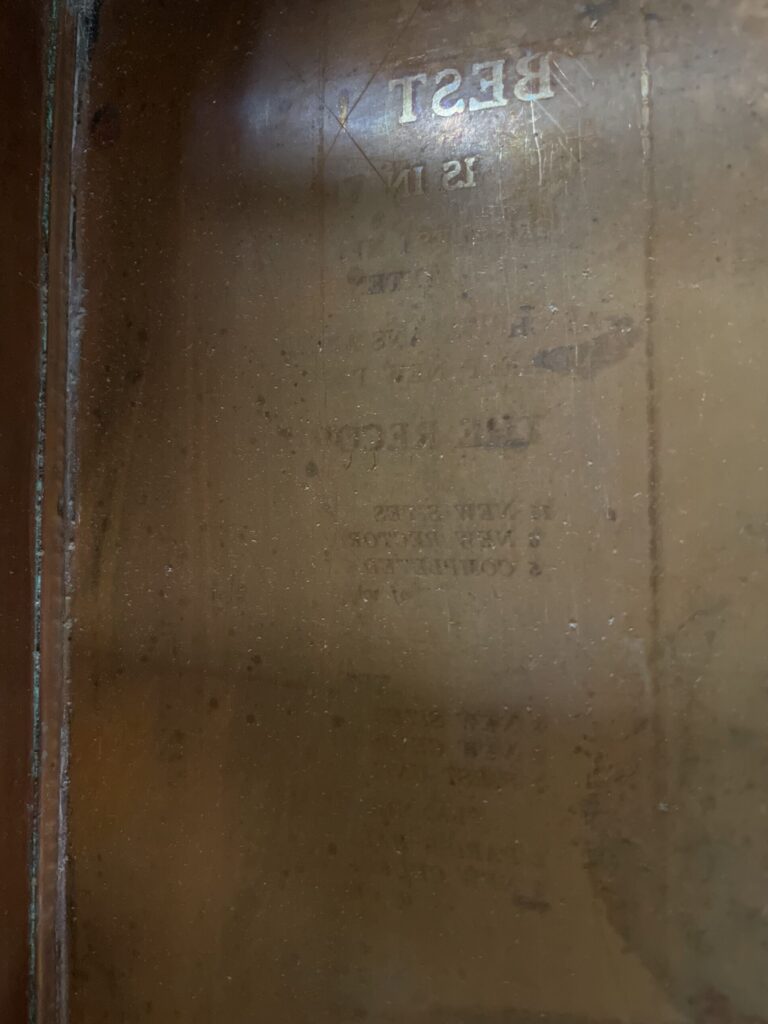
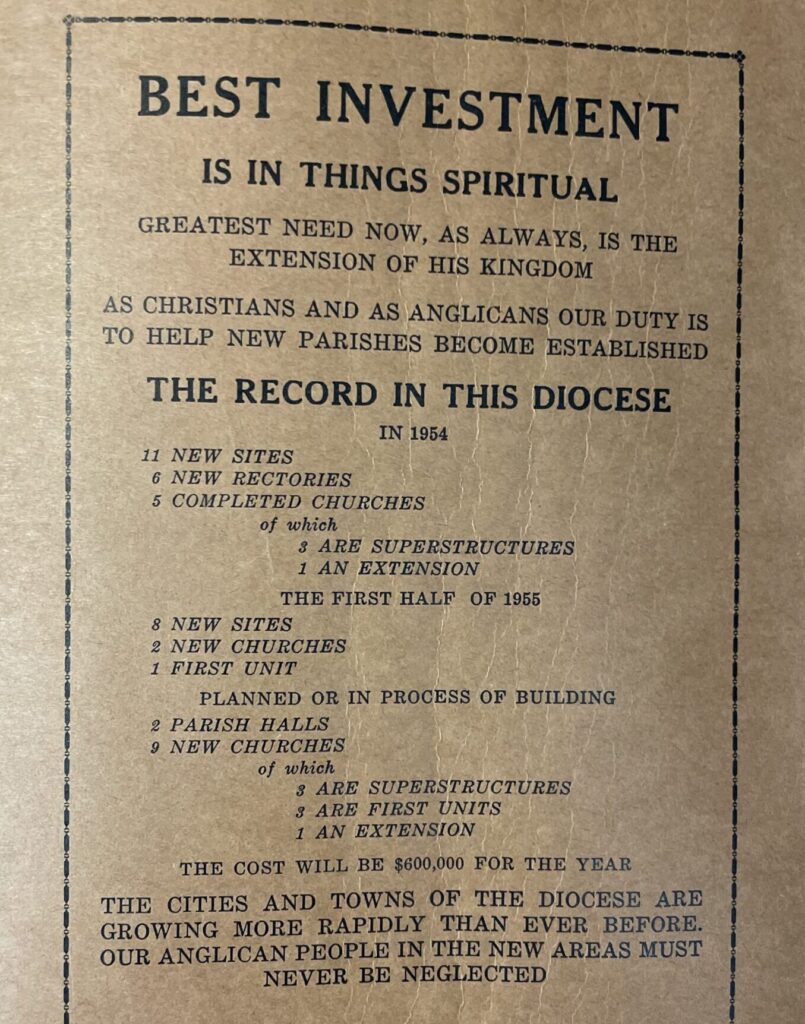
The contents of the time capsule included service bulletins from the turning of the sod ceremony and the laying of the cornerstone, a building fund canvas booklet and pledges, two coins minted in 1955, the Globe & Mail from Oct. 22, 1955, along with a 1955 Synod Journal and the order of service for the enthronement of Bishop Wilkinson on Oct. 18, 1955. It’s hard to believe that all of that was able to fit into such a small box; however, the imprint of the back on the Synod Journal onto the copper inside the box confirms that they were!
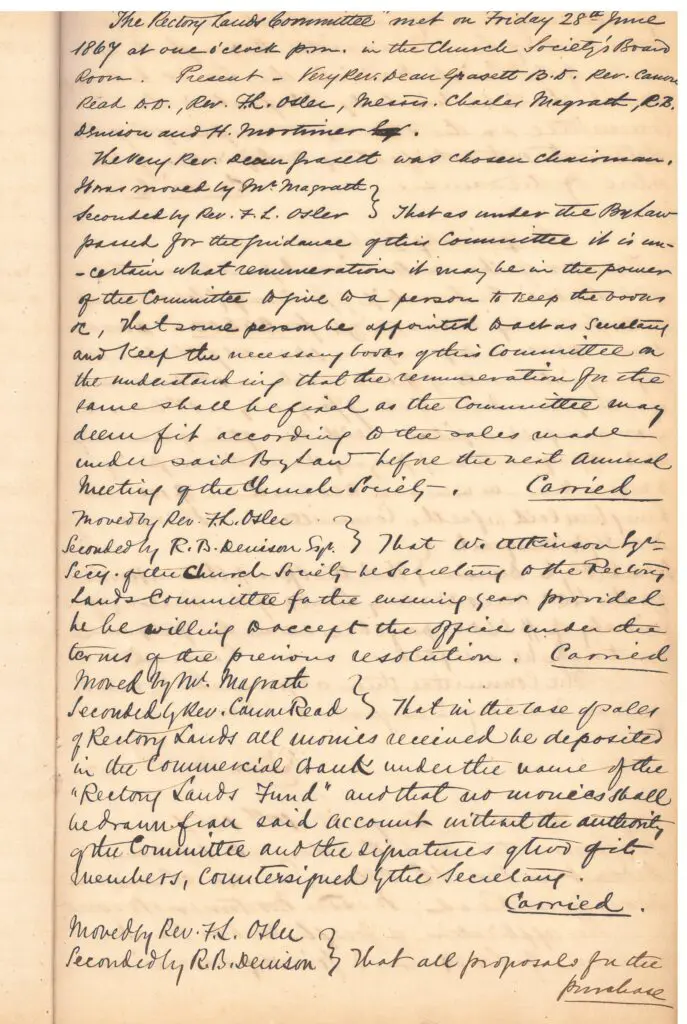
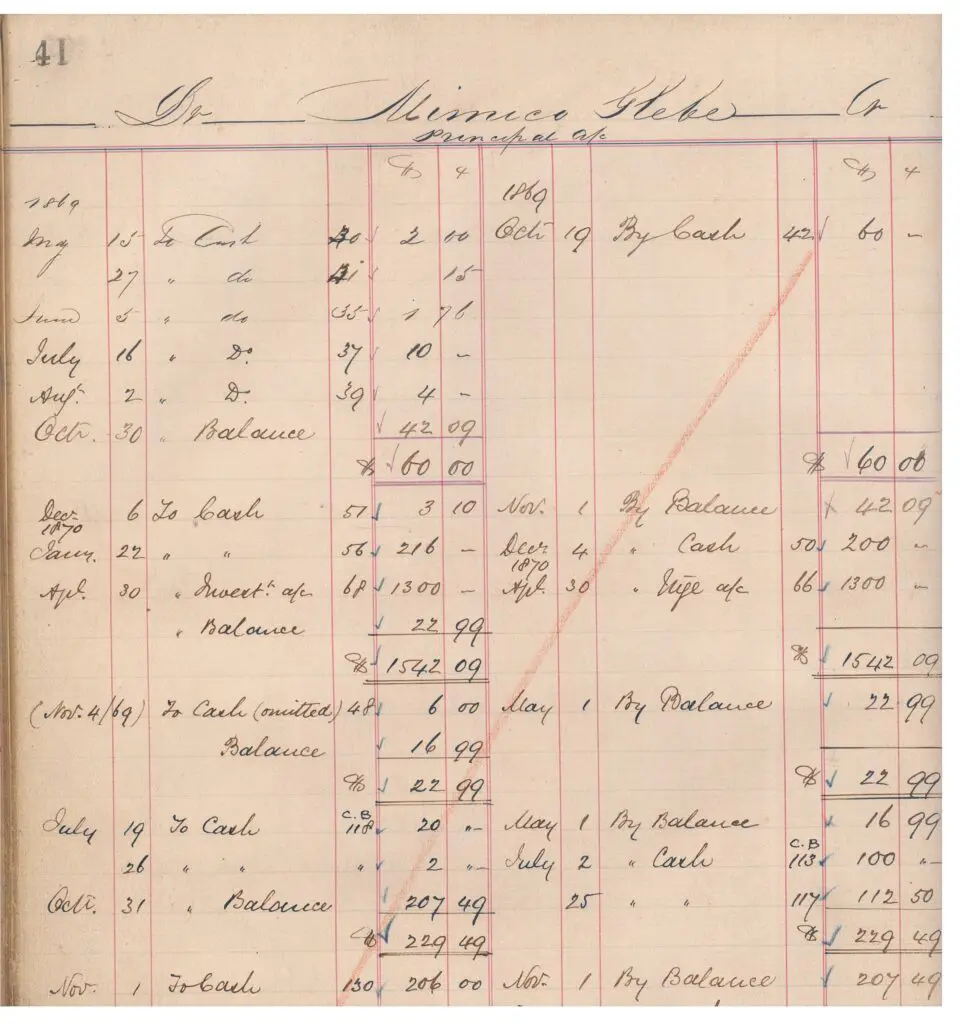
R – Rectory Lands Committee
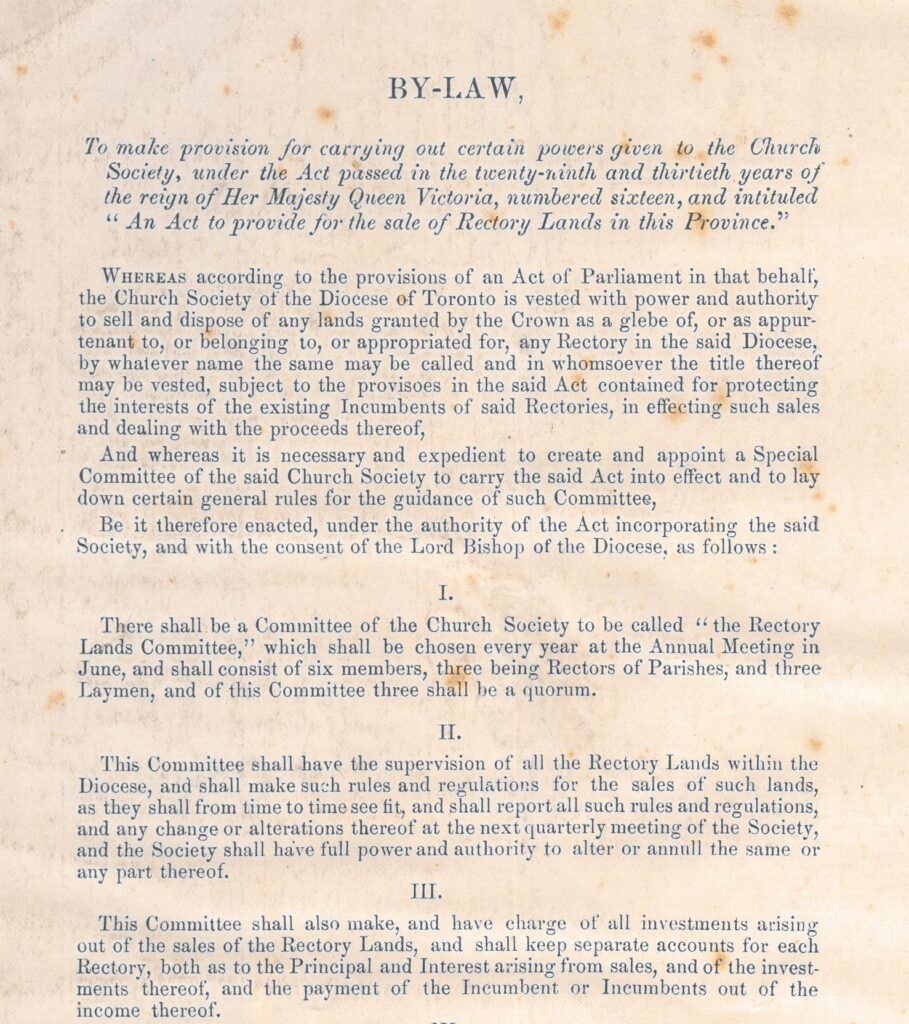
On Aug. 15, 1866, An Act to Provide for the sale of Rectory Lands in this Province was assented to. This allowed for the Diocese of Toronto to sell rectory lands and invest the proceeds as endowments, with the income to be used for the benefit of the incumbents of said rectories. This act came into being to try to alleviate the struggle to earn income on the land itself through rents. Renting the rectory lands to individuals resulted in additional work for the Church Society of the Diocese of Toronto to follow up with arrears on rental income.
To ensure that the proceeds of sale were properly managed, the the Church Society of the Diocese of Toronto enacted a bylaw to establish the Rectory Lands Committee.
The Diocesan Archives holds the minutes of the Rectory Lands Committee from its establishment in 1867, as well as the ledgers associated with sale proceeds and income distributions.
S – Slides
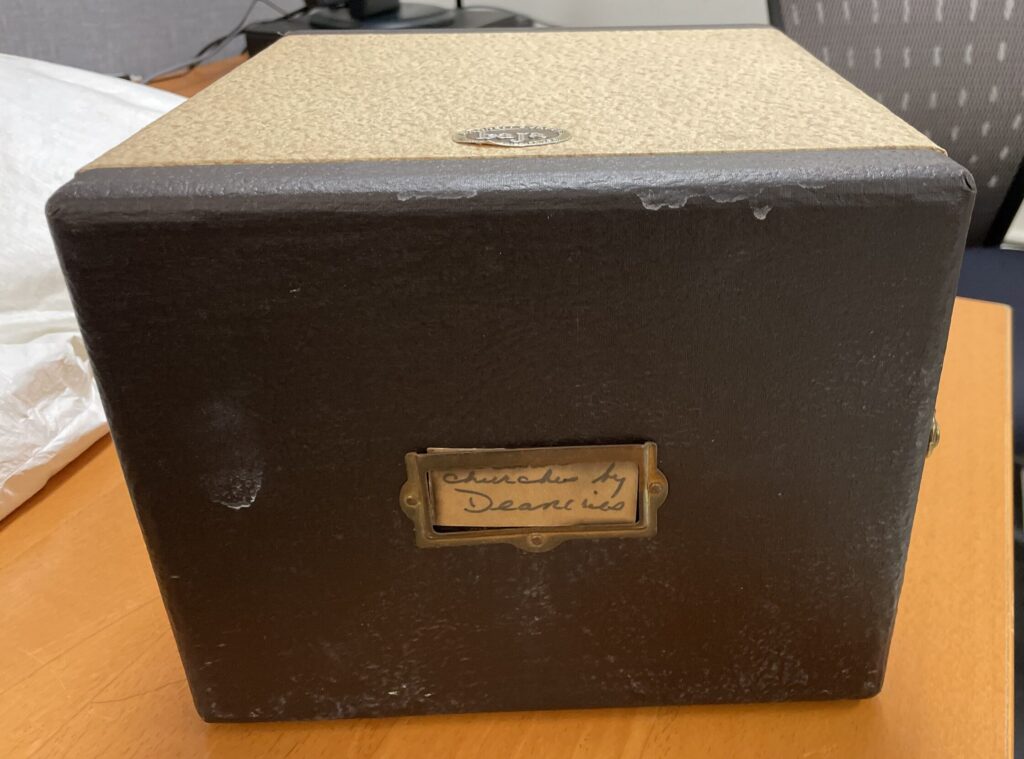
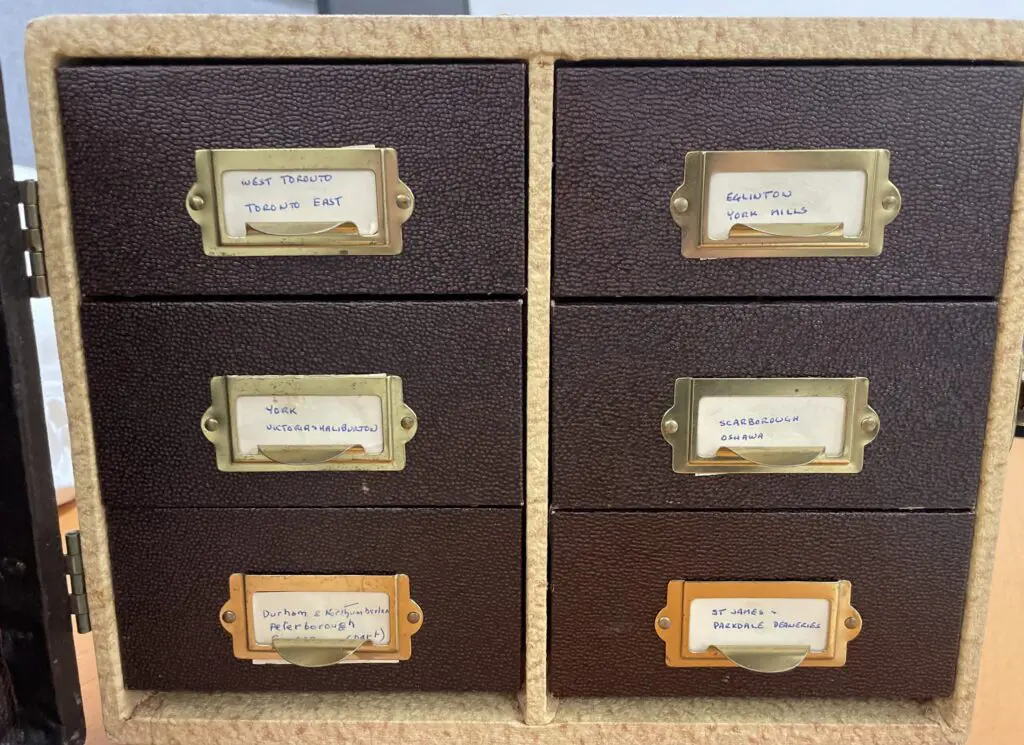
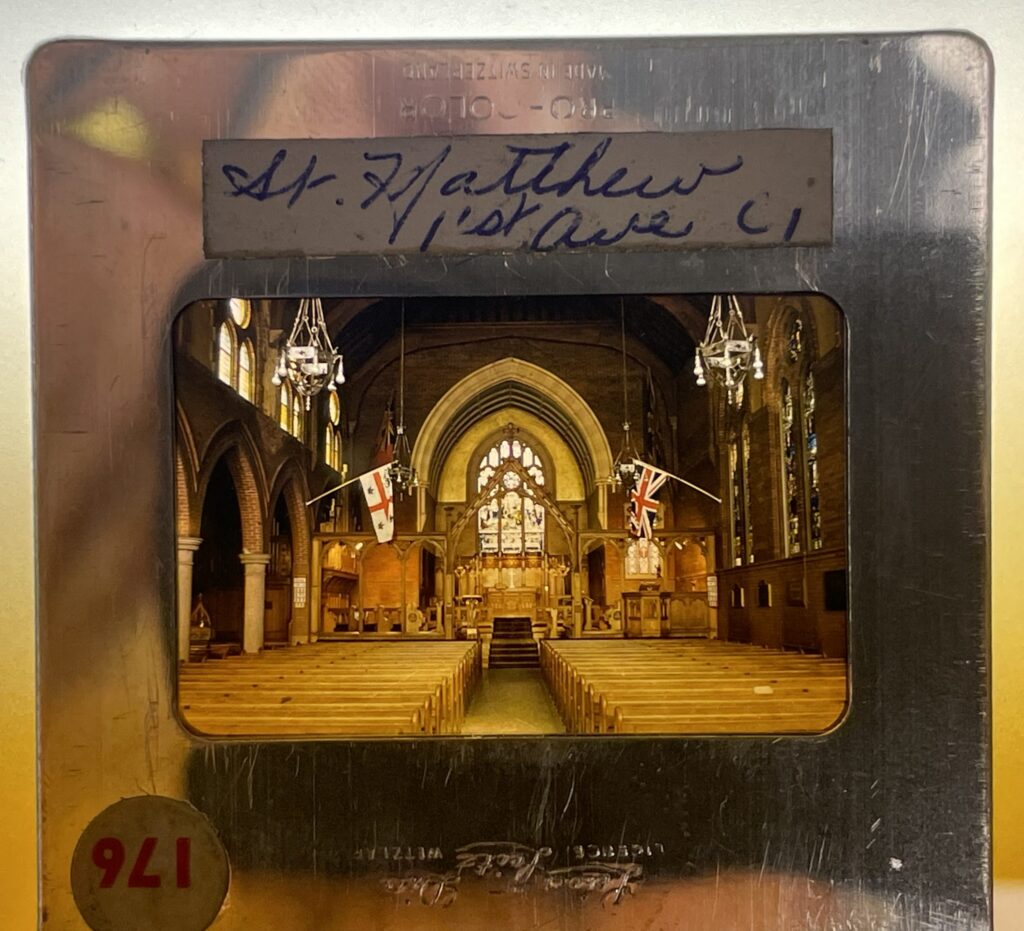
The Diocesan Archives holds a fairly large collection of slides. Recently we had a volunteer help with rehousing these slides into archival-safe containers. One of the more interesting collections of slides resulted from the first project that Bishop Wilkinson asked the newly formed Archives Committee to undertake in 1956. He asked the committee to take slides of all church-related building exteriors in the Diocese, as well as slides of the interiors of churches. These were stored in a unique wood and leather box, with drawers of slides sorted by deanery. The original storage box has been kept for its unique qualities, and the slides have been rehoused to acid-free slide boxes.
A future archives project will involve digitizing these slides. Once digitized, we hope that some congregations might be interested in taking the photos from the same angles today to be able to compare how surroundings and church decorations have changed in 70 years.
Next week we will share Archives Awareness T-Z!
